Tuesday, April 27, 2010

La-raw-sagna


Never be afraid to try something new
You just might like it...

Last summer, I had the pleasure of eating at Pure Food and Wine in New York City, a raw, vegan restaurant with a great reputation for doing what they do...really, really well. Now, although I was neither a vegan or a raw foodie, I had to see what the hoopla was all about. The menu items such as zucchini "fettuccine" and raw "lasagna" made the cook in me look up with a curious gaze and wonder: will this be any good, and if so, um how the heck do I make it?

I ordered the zucchini and local hothouse tomato lasagna, and holy bellezza it was insanely delicious. So good that I can still remember it's flavor and texture today.

Even if you don't want to be a die-hard raw foodie, there are some very compelling reasons to want to eat more raw food. More nutritional bang per bite, weight loss, detox - and this is cutting it way short. Interested in hearing more? Click it.

Almost a year later, I have finally gotten around to making my own version of raw lasagna, thoroughly inspired by the one I had at Pure Food an Wine. You can play with this recipe and substitute with different nuts and herbs to you liking. All you really need is a food processor. E.Z.!

Vegan Raw Lasagna
Serves 2 hungry people

2 small/medium zucchini, cut lengthwise into thin strips using a mandoline. Don't have a mandoline? You can use a cheese slicer. Don't have a cheese slicer? Put your knife skills to the test and cut by hand. Slices should be about 1/8 inch thick.

For the cashew cheese:
1 cup of raw cashews (soak nuts in room temperature water for 2-3 hours to make them more easily digestible)
1 small clove of garlic
1 tbsp lemon juice
1/2 tsp. salt
3/8 cup of water

1. Combine all ingredients in food processor adding water at the end.

For the pesto:

2 cups of basil leaves
1/2 cup of walnuts
1 clove of garlic
2 1/2 tbsp extra virgin olive oil
1/4 tsp salt

1. Combine all ingredients except for the oil in food processor. Adding the oil through the spout at the end.

For the tomato sauce:
2 ripe tomatoes cut into chunks
1 tsp oregano
pinch of salt and pepper

1. Combine all ingredients in food processor.

To assemble:
1. Lay out 4 slices of the zucchini on a serving plate side by side. Top with 1/3 of the cashew cheese, 1/3 of the pesto and 1/3 of the tomato sauce.
2. Top with 4 more slices of zucchini and repeat.
3. Lay the remaining 4 slices of zucchini and finish by topping with the last of the cheese, pesto and sauce.
4. *Optional* Garnish with some chopped up sun dried tomatoes.

Serve with a side salad and enjoy!

Tuesday, April 20, 2010

Stress - A Four Letter Word


Ahhh stress...

This has been a hot topic in my circle lately, making me realize that although most of us are aware of how important it is to manage stress, it is good to have reminders and tips on how to do so, and living a healthy life depends on it.

Stress is a bitch! And I'm not talking about the cute little Boston Terrier, I'm talking about the ferocious guard dog that wants to eat you for dinner. Our doctors tell us so; psychologists teach about coping with it; the news stations and magazines are constantly covering it. But still, it can be easy to forget to manage. It seems like stress is a sort of addiction for some people - like the bad train wreck you can't take your eyes off.

If I'm not worrying, there must be something to worry about...

Is this you? If so, don't feel bad. It's easy to fall into this pattern. As people we have the tendency to want to constantly reach higher and do better at what we are doing, and therefore we are constantly faced with challenges. And while setting goals and challenging ourselves are great actions in life, they can sometimes create stress. It is really important to remember to ENJOY life during the process - this means managing stress and maintaining balance as much as possible. It also means keeping our focus on what is really important. There is always something to worry about in life, no matter who you are or what your circumstances are - even a little bitty fly has something to worry about (gross!). But if we remember what is truly important to us, managing stress can become a whole lot easier and then worrying becomes a thing of the past.

There are big problems in life that require our attention and action, and then there are insignificant situations and small stuff that we sweat, creating the fabulous outcome of torturing ourselves. The first step in changing this 'stress until you mess' pattern is to know the difference between the two. To figure that out, I have found that it helps to ask yourself: how important is this problem, how much will this matter to me in one year or five years, and what is really at stake? If these answers suggest that you have a real issue on your hands, then take the energy you would use to stress out and channel it into a plan of action. By taking positive steps of action, the situation is on it's way to being worked out and stress reduction will follow (and sometimes just knowing that you are being proactive helps you to feel better). I know, this can be easier said than done - but like anything else, it just takes practice. While you are doing that I encourage you to read The Positivity Blog for some really good tips on how to be a relaxation ninja!

On the other hand, if you realize the you are torturing yourself and sweating the small stuff...stop! Please stop. There a far better oceans to swim in. Be aware of these tendencies, take a deep breath and center yourself. Then remember this quote: "If you want to test your memory, try recalling what you were worrying about one year ago today".

Here Here to Peace.

Saturday, April 17, 2010

Spring Renewal and Veggie Nori Rolls


Could it be? Is the cold weather really over? Almost?? Yes?

Spring! A time to detoxify and renew, cleanse the body from the heaviness of winter foods and clear out any stagnant energy that has taken residence in our lives. Just like spring cleaning in the home, here are a few things you can do to spring clean your body and soul. And then I want to tell you about my new obsession with nori rolls.

1. Eat seasonal foods. Nature tells us what to eat during this time by the foods that it gives us. Artichokes and dandelion greens are both known for cleansing the liver and blood, asparagus is a diuretic with great detoxifying properties, and peas are a rich in restorative nutrients that help support the energy producing cells and systems of the body. Shop at local farmers markets. It helps the environment, you will know what's in season and you will get the freshest and most nutrient dense vegetables.

2. Exercise until you sweat! As we all know, moving our bodies in any way, shape or form is one of the most important things we can do for our health, and the fact that it helps our bodies to detoxify is one major reason why. Exercise breaks up fat in the body which is the preferred storage space for toxins, it increases blood and lymph node circulation which leads to the removal of metabolic waste and other toxic substances from our cells, and (drum roll)......it leads to sweating! I know, we are all obsessed with wearing deodorant and trying not to perspire, but sweating is one of the best ways to cleanse our bodies! The benefits surely outweigh the discomfort. Me, I don't have a choice in the matter, as I melt like an ice cube on a hot day.

3. Spend a little more time with an empty stomach. Several small meals a day has become very popular with the idea that it keeps the metabolism up. The down side of this though is that the body is ALWAYS processing food. Not only is that very straining on the organs, but when we allow our body time WITHOUT digesting food, it gets a lot done in the cleaning department. This is especially true when we are sleeping. During sleep, our bodies go into a restorative and detoxifying healing mode; when we sleep with food in our system, it has to work on digestion and doesn't get the main job done as well.

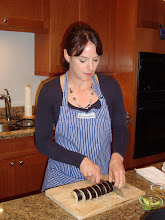
Transitioning into spring has made me partially obsessed with vegetable nori rolls. They are light, tasty and quick to make. If you are as intimidated as I used to be about making sushi or "un-sushi" rolls, let me ease your mind, there is really nothing to it! You DO NOT need sushi class 101 and you DO NOT need a bamboo mat. You need your hands, a cloth napkin and a few basic ingredients. This recipe can be tweaked to your liking to include whatever variety of veggies you find at the farmers markets during the summer as well.

Vegetable Nori Rolls with Peanut-Ginger Sauce
Makes 8 pieces
1 sheet of sushi nori
2 asparagus spears - steamed for 5 minutes and chilled under cold water.
2 long slices of avocado
4 strips of cucumber, julienned
1 1/4 cup of cooked brown rice cooled to room temperature * It works best if the rice has not been refrigerated, but you can still make these if it has. You just might need to use more pressure when laying the rice on the nori strip for it to stick well.

For the peanut-ginger sauce
Whisk the following ingredients in a bowl:
1 tbsp crunchy peanut butter
1/2 tsp fresh ginger, finely minced
1 tbsp soy sauce, tamari or shoyu
1/2 tsp lime juice
1/4 tsp rice vinegar

1. Lay a cloth napkin out and place nori sheet horizontally on top. Spread the rice to cover the nori, leaving about a 1/2 inch at the top empty, this is where you will seal it. Keeping your hands moist with water will help stop to rice from sticking to your fingers.
2. Place the asparagus spears down next to each other, about 1/4 inch from the bottom.
3. Place a piece of cucumber down on each side of the asparagus from end to end.
4. Place slices of avocado on top of asparagus and cucumber.
5. Spread the peanut ginger sauce evenly on top of the veggies.
6. Use the napkin to begin rolling, using a bit of pressure to keep it tight. When you get to the end, wet the empty part of the nori with some water on your fingers and seal. Slice into 8 small pieces with a sharp knife. Wet the knife with water in between each slice to stop it from tearing the nori.
7. Serve with soy sauce for dipping.

Wednesday, April 7, 2010

Mushrooms and Mustard Greens


I was hungry, peeked in the refrigerator, and there they were again...

I might have gone a little overboard buying mushrooms the other day. I don't say that because of how I walked out of Whole Foods with three large bags of them, or because I've had so many meals with them in the past week that I'm turning INTO a mushroom! But because somehow, after all of that, there were still enough fungi in my crisper to set up camp and throw a party. Martha Stewart would've probably turned these bad boys into a suspicious decorative throw pillow by now; however, I am not so crafty and have to stick with what I know. But, before you get excited about the mushrooms, you should know that they are only the inspiration and supporting cast of this story. I am on a greens mission here!

Wait...keep reading! In my last post I talked about collard greens and promised to deliver a tasty mustard green recipe next. Maybe some of you have not have been hanging off the edge of your chair waiting for this, and yes, I've been in your shoes. But here is my sales pitch: Eat more greens and you will feel better, have more energy and help your body to detoxify! Why mustard greens? Well, for one thing, it's because variety is the spice of life and sometimes you just need to switch it up! But if that's not enough of a reason for you, then I should mention that some dark leafies like spinach, swiss chard and beet greens contain significant amounts of oxalic acid which can interfere with mineral absorption. This is not to say you shouldn't eat those greens, but it's another good reason to include more of a variety in your diet. Let's go wild! Oh and also, this recipe only takes 15 minutes to throw together. Bonus!

Sauteed Mustard Greens
Serves 4 as a side

1 tbsp olive oil
1 lg shallot, diced small
2 cloves of garlic, minced
1 cup of red cabbage, chopped small
3 cups of shiitake or portabello mushrooms, stems removed and sliced
Approx 3 cups of mustard greens (washed, large stems removed and torn into small pieces)
1/2 tsp salt
1/2 tbsp cider vinegar
1 tbsp garlic gamasio - Gamasio is a mixture of dry roasted sesame seeds, garlic & sea salt. It can be found in most large grocery stores in the Japanese section. You can substitute with sesame seeds and add a bit more salt if needed.

1. Heat olive oil in a large saute pan over med/low heat. Add shallots and garlic and cook for 2-3 minutes.
2. Add cabbage, season with salt, and cook for another few minutes or until cabbage starts to soften.
3. Add mushrooms and cook for a few more minutes until they start to brown.
4. Add the mustard greens, reduce heat to low and consistently stir around for a few more minutes until greens are soft but not mushy.
5. Mix in the cider vinegar and gamasio just before serving.

Wednesday, March 31, 2010

Holla to the Collards! Don't hate.


There is a silver lining to every green. What!

Poor little collard, trying so hard to stand out on the produce shelf. Screaming "pick me" in gym class, only to be outshone by it's more familiar green sisters. "It's just not fair. If only people knew." The little collard told itself.

OK, fantasy literature aside, I have to say that this beautiful, tender green did not always have my heart. I wanted to love ALL greens, knowing the major health benefits (<= you want to read this) to having them in my daily diet, but found some of them to be really bitter and only forcibly edible. Collards were at the top of that list, until I found that a longer cooking method makes them deliciously unavoidable! I mean, that's how they do it in the south, right? So...

This recipe calls for cooking the collards in a good amount of vegetable broth, and you might wonder what to do with the excess broth when they're done. Do not discard! This broth makes for a very nutritious gravy, containing water-soluble vitamins and minerals that have been leached from the greens. And, it is very tasty. You can use this gravy, which is known as pot likker (I still laugh at the term), to top off accompanying meat, add it to soups/stews, or as it's done in the south, serve it with some corn bread for dipping. Yum!

Serves 4 as a side dish
1 large bunch of collard greens
2 cloves of garlic (1tbsp), minced
2 1/2 cups of vegetable broth or meat broth (about enough to just cover the greens in the beginning)
1/4 teaspoon sea salt
1/2 tablespoon olive oil

1. Rinse collard leaves under cold water. Chop off the rough ends of the stems and discard. Stack and roll into a cigar shape and then slice into 1" strips.
2. Heat oil over medium/low heat in a medium saucepan. Add garlic and saute for 1-2 minutes.
3. Add the greens to the pot and stir around to coat for 1-2 more minutes.
4. Season with salt, add broth and bring up to a simmer on medium high heat.
5. Cover, reduce heat to low. Cook for about 35-45 minutes or until greens are very tender and not bitter. Check about half way through and add more broth if needed. Because the size of greens may vary, general rule is there should always be enough broth to cover at least half of the greens during cooking.
6. *Optional - squeeze fresh lemon juice over them before serving.

To be continued...
Next stop: The mustard green

Monday, February 1, 2010

Food, People and Gratitude


Maybe it's the Italian in me, but when I think about food, I think of friends, family, laughter and good times (OK, and a nice glass of red...for those of you who know me)! Or, maybe I'd like to credit my heritage on this thinking, but really I know that it's because food brings people together, no matter what the culture. It has since the very beginning, and it will until the end. When we share the experience of food with others we connect on a deeper level, with all of our senses engaged, and through this our memories of times together are enhanced and last longer. It is the celebration and the nurturing of a loved one. It is the engagement of our common ground, where it is abundant and where it is scarce. It is for these and many more reasons, that food is the one thing I never forget to be grateful for.

This recipe for turkey and quinoa meatballs began with the idea to make a healthy meatball, and ended with a collaboration of ideas from a sister and friend. Once again...food bringing people together! Thanks to Lisa and Amanda for their input on this recipe.


Turkey and Quinoa Meatballs
Serves 6

1 lb of ground turkey breast
3/4 cups of cooked quinoa - What the heck is quinoa? Click it.
2 cups of baby spinach
1/4 cup of pine nuts
1 egg
1/4 cup of onion, finely diced (pulse diced onions in a food processor to make them fine)
1 tbsp of minced garlic (about 2 large cloves)
1 tbsp of miso tamari, or soy sauce
1/2 tsp salt
1/2 tsp pepper
1/2 tsp oregano
1 tbsp grape jam * What, you ask? This is what happens when you look around the refrigerator for ketchup, you don't find it and then you start to get ideas. Trust me, you won't taste grapes and you won't want to roll your meatballs in peanut butter! The jam adds a bit of depth to the meatballs while balancing out the savory flavors.

Preheat oven to 425

1. To cook quinoa, bring 3/4 cups of water to a boil. Rinse 1/2 cup of quinoa and add to pot with a pinch of salt. Cover and reduce to low, simmering for about 12 minutes or until water is absorbed and quinoa is fluffy. Becuase it can be tricky to cook very small amounts of quinoa, this amount makes extra. Just measure it to 3/4 cups after it's cooked and then you get leftovers!
2. To cook the spinach, put it into a steamer basket and rest it over the quinoa during it's last 2 minutes of cooking with the cover on. Or simmer in 1/2 cup of water over meduim/low heat for 2-3 minutes or until wilted.
3. Toast the pine nuts in a dry skillet over medium/low heat for about 3-4 minutes or until fragrant.
4. Chop the spinach into small pieces and squeeze out excess water. In a large mixing bowl, combine the spinach, cooked quinoa, pine nuts and all other ingredients. Mix well.
5. Line a small baking sheet with foil and drizzle with olive oil, coating a thin layer of oil over the entire surface. Form mixture into approximately 15 meatballs and lay out on baking sheet. Bake for 25 minutes.

Wednesday, January 20, 2010

Give Me Some Meat!


It was 3am this morning and BOING! My eyes popped wide open with only one thing on my mind. Meat, meat and more meat. Frisky ladies get your minds out of the gutter! I'm talking about red meat, and the redder the better. Brace yourselves vegetarians, I'm going to go out on a limb here for a minute. You might quiver, but please hear me out.

During my course at Integrative Nutrition and in the journey I've embarked on to figure out my own body (it's needs, it's likes and it's utter disappointments), I have learned quite a few things. One of which is that eating in harmony with the seasons is as essential to my health as getting the vitamin D that is severly lacking in the winter. In the past years, by the time February arrived, I found myself feeling sluggish, depressed and diagnosed anemic. Sound familiar? This baffeled me for some time. I mean, I ate really well (so I said to myself). Lot's of salads, lean protein, minimal animal products, tons of veggies, took vitamins, dotted my i's, crossed my t's. You get the point! But how could I have felt so poor? And HOW on earth could I have been anemic when I ate greens every day? Well, what I've come to learn is that this is a fantastic diet when it's warm out and when my body needs to detoxify, cool itself off and lighten up! But fast forward to the present =====> it is winter...and here I am,...freezing cold in Chicago and getting woken up from dreams of grass fed beef.

We are all different. We have different bodies, blood types and physical stature. (Not to mention hair color, sense of humor and preference of Leno vs. Letterman). So why would we expect for one diet to work for us all? When you shopped for a wedding dress/tuxedo, did you buy it off the rack and walk away with the perfect fit? OR did you decide which one you liked and pass it on to the professionals to make it fit you like a glove? More on this

So what did I make after being jolted out of a deep sleep with meat on my mind? Well, stout braised beef stew, of course.

Serves 4-6

1 pound of stew beef, cut into 1/2 inch chunks.
1 small yellow onion, diced
4 small/medium carrots, roughly chopped
1/2 daikion radish, roughly chopped (optional - Daikon radish is great for breaking down fats)
3 celery stalks, thinly chopped
1 large potato of your choice, cut into 1/2 inch pieces
1/2 cup of wheat flour (gluten free, omit the flour or substitute with GF flour)
1 tablespoon tomato paste
6 cups of beef broth
1 cup of good stout beer (gluten free omit stout, no biggie)
olive oil

1. Season the wheat flour with 1 teaspoon of salt and 1/2 teaspoon of pepper. Toss beef around in flour to coat, shaking off excess.
2.Heat 1 tablespoon of olive oil in a large soup pot. Add carrots, celery and onions. Saute over medium heat for about 10 minutes or until vegetables soften.
2. Remove vegetables from the pot and set aside. Heat another tablespoon of olive oil in the pot, add the beef and saute over medium heat, turn beef to brown on all sides. About 5 minutes.
3. Add vegetables back into the pot. Add the beer, stock, potatoes and tomato paste. Bring to a boil, partially cover and reduce to a simmer.
4. Simmer for approximately an hour, or until beef is tender and broth has thickened.